WHY THIS MATTERS IN BRIEF
Self-reconfiguring chips that skip costly software rewrites could ease the power crunch throttling AI’s expansion.
Matthew Griffin is the World’s #1 Futurist Keynote Speaker and Global Advisor for the G7 and Fortune 500, specialising in exponential disruption across 102 countries. Book a Keynote or Advisory Session. Join 1M+ followers on YouTube and explore his 17-book Codex of the Future series.
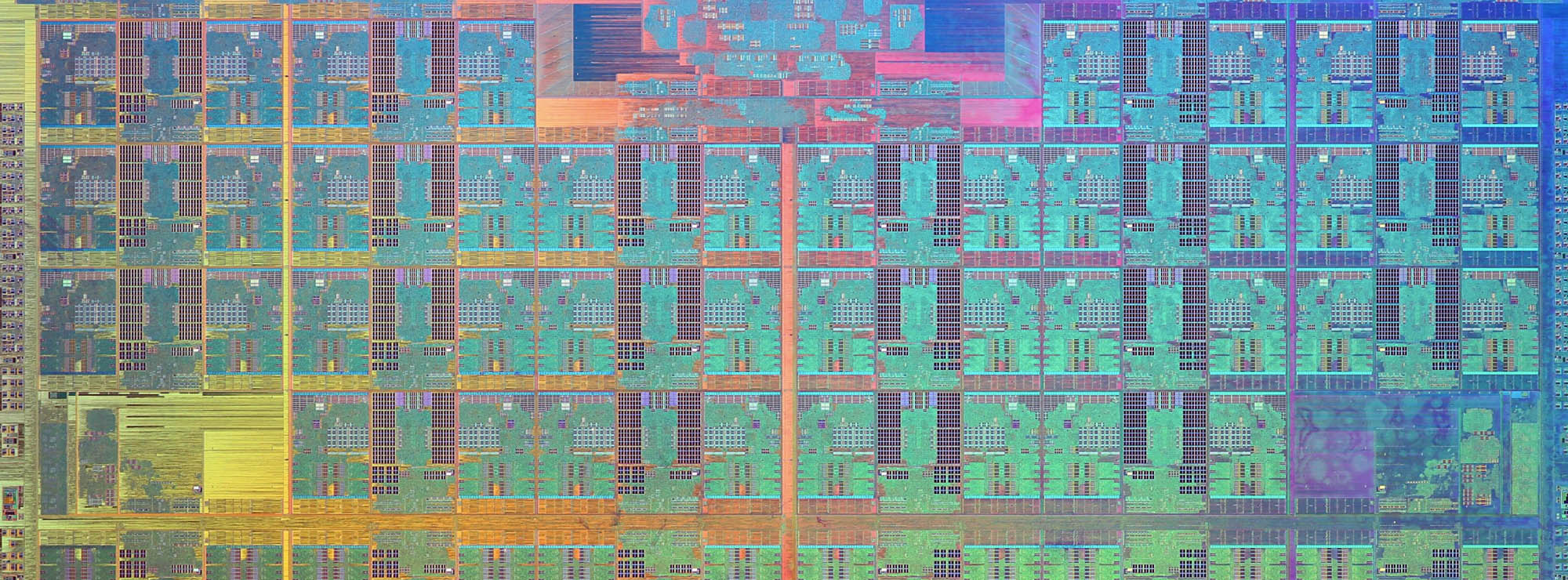
Late last year, Sandia National Laboratories started testing an unusual type of supercomputer. Unlike conventional supercomputers, which consist of large interconnected clusters of CPUs and GPUs, this machine incorporates reconfigurable Artificial Intelligence (AI) accelerators that optimise their operations for the particular computation that’s being run. This new architecture, which is similar to Field-Programmable Gate Arrays (FPGAs), is built by startup NextSilicon. A key benefit of the approach is that it doesn’t require a software rewrite: the hardware optimises itself for the software, not vice versa.
Spectra, which incorporates 128 NextSilicon Maverick-2 accelerators, is still in the investigative phase, says program leader and Sandia senior scientist James Laros. NextSilicon, which has headquarters in Tel Aviv and Minneapolis, claims its accelerators generally use half as much power as Nvidia’s Blackwell while offering a quadruple speed advantage. The power and speed vary depending on the particular application.
NextSilicon CEO Elad Raz says typical architectures predict the next instruction then fetch and cache data.
“What if you can remove all that overhead?” he wondered. “A lot of people are trying to build a new CPU or a better GPU. Other companies have a software solution,” says Raz. “I wanted to build something with software and hardware collaborating together.”
The company’s Maverick-2 first runs the application on a CPU and identifies which operations run most frequently. Then, it reconfigures the chip to schedule its work in a way that optimises data flow. Instead of back-and-forth fetching of data, he says, “you can generate a pipeline.”
The Future of AI Keynote: Dystopia, Utopia and Control | AU, Miami | Matthew Griffin, by Futurist Keynote Speaker Matthew Griffin
And a key advantage of the company’s design is that users do not have to rewrite their software in order to run it more efficiently on the system. The hardware adapts to the software, not vice versa.
Most of the applications Sandia runs are constrained by memory bandwidth, says Laros.
“What if we can go faster because we don’t have to go back to the main memory?” That’s the potential of the Spectra architecture.
Raz says Maverick uses half as much power as Nvidia’s Blackwell and can perform HPCG, a supercomputing benchmark, twice as fast; it performs PageRank, another benchmark, 10 times as fast. Sandia scientists are currently assessing Spectra’s performance when running molecular dynamics simulations, which predict the movements of atoms and are widely used in physics and materials science, and other core codes used by the U.S. Department of Energy.
“Where it will provide a benefit is if we can get better performance for types of apps that don’t run well on GPUs, or if we can get the same performance with better energy efficiency,” Laros says.
Sandia performs computer simulations to maintain the United States’ nuclear arsenal.
“We’ve replaced testing with simulation and computing,” Laros says. Because of the high stakes of this mission, the lab has to “make sure we’re not putting all our eggs in one basket,” he says. If a company whose technology the U.S. government relies on for nuclear stockpile stewardship should go out of business, the government needs to have alternatives. “We maintain a pipeline of overlapping technologies,” Laros says.
Spectra is part of Sandia’s Vanguard program, which allows the government to partner with startups to test out and help develop early-stage high-performance computing technologies. “The goal is to test them for our advanced simulation and computing mission codes,” Laros says.
Sandia runs a large portion of its code on CPUs, says Laros. They’ve adopted GPU based systems built by Nvidia as well. These systems offer speed advantages, but they require lab staff to port their code.
“It took us hundreds of hours,” says Laros. And there are important scientific simulations that don’t run well on GPUs, including Monte Carlo methods, which can be used to assess complex risks.
Laros says it’s unusual right now to find a computing startup focusing on high-performance scientific computing – “It’s all about AI” these days, he says. Next Silicon is developing hardware that the company hopes will have advantages for both, thanks to its promised power savings. Power availability is a major constraint on large-scale AI data centers today. Raz hopes NextSilicon’s accelerators will offer an advantage by enabling more efficient performance for a given amount of electricity consumption.
The Vanguard program allows the government to test the potential of risky technologies. “You’re going to fail once in a while,” says Laros. “Our goal is to do very advanced technology discovery. We prove it out. Other labs and other commercial industries will follow.”
Why does a self-reconfiguring chip matter for AI?
Because the biggest brake on AI today is power, not ideas. A processor that adapts its own hardware to each workload – without forcing engineers to rewrite their software – could deliver more useful computation per watt, which is exactly what data centres straining against electricity limits desperately need.