A Google intern built a shockingly good synthetic image generator
Researchers are trying to create a new form of AI, or Creative Machines, that can generate their own content from scratch, and the systems are improving all the time.

Key takeaways
- The textures of the images, from the dog’s fur to the hamburger’s juices, are incredibly realistic, with careful study revealing only tiniest of tells that the image isn’t a real one.
- GANs are common in machine learning research, and BigGAN isn’t that different from other algorithms out there.
- Brock used 512 of Google’s Tensor Processing Units (or TPU) to generate his 512 pixel images, and he says his experiments generally run for between 24 and 48 hours.
Cite or link to this article
Griffin, M. (2019) 'A Google intern built a shockingly good synthetic image generator', 311 Institute, 16 December. Available at: https://www.fanaticalfuturist.com/2019/12/a-google-intern-built-a-shockingly-good-synthetic-image-generator/ (Accessed: 25 October 2026).
For years, artists and researchers have been experimenting with training neural networks to generate images that look real, but most of them look like strangely distorted, grotesque caricatures of how a computer thinks the world looks.
However those days might be behind us after a Google intern and two researchers from Google’s DeepMind division released a paper, currently under review for a 2019 conference, featuring AI-generated images that blow everything else out of the water, literally.
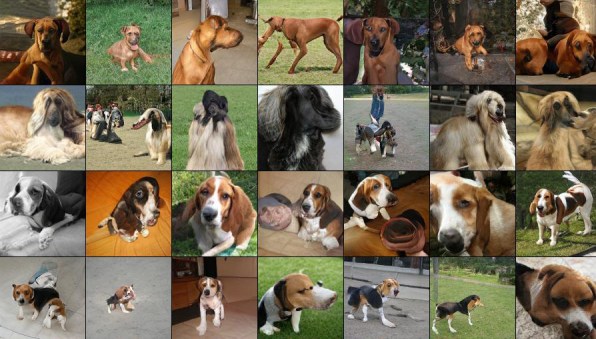
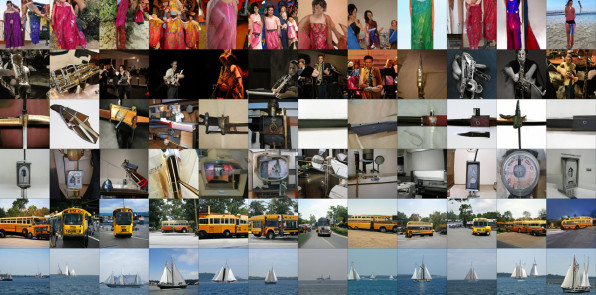
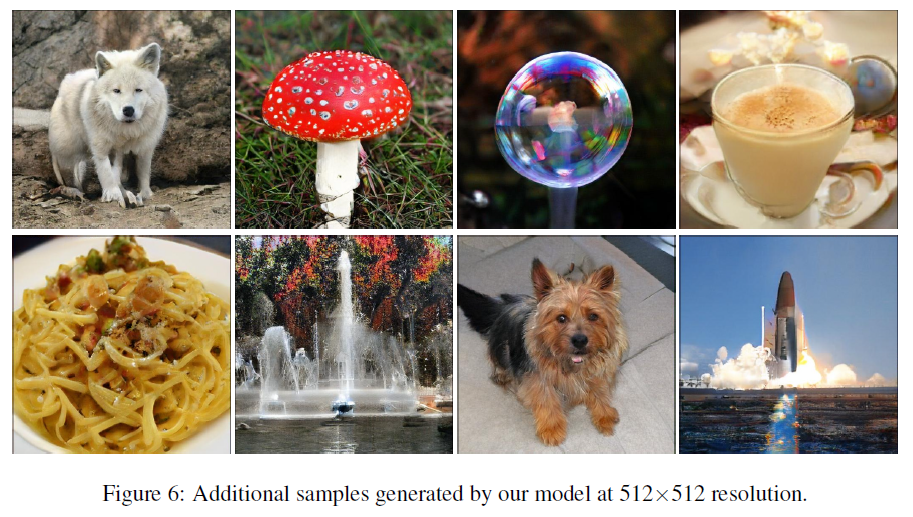
Based on the small thumbnails, it’s almost impossible to tell that they’re not real images - there’s a chestnut-colored dog with his tongue hanging out, a beautiful ocean vista, a monarch butterfly, and a juicy hamburger complete with melted cheese and a bun that looks like it was brushed with butter. The textures of the images, from the dog’s fur to the hamburger’s juices, are incredibly realistic, with careful study revealing only tiniest of tells that the image isn’t a real one. And the research is making waves in the research community, where some expressed shock at the image quality.
 Courtesy: Andrew Brock
Oriol Vinyals, a research scientist at DeepMind, for example, wondered if the images were the “best GAN samples ever.”
“I want to live in a #BIGGAN generated world!” wrote Meltem Atay, a neurotechnology PhD student who focuses on machine learning. Another one noted that the images are “unbelievably detailed,” and another asked, “Wait . . . these are generated images?”
 Courtesy: Andrew Brock
The algorithm that did this? It’s called BigGAN, the last three letters of which stand for Generative Adversarial Network. This kind of neural net is composed of two models, one that conjures random images out of random numbers, and one that compares these generated images to real images and tells the generator just how far off it is.
GANs are common in machine learning research, and BigGAN isn’t that different from other algorithms out there. But there is one big difference, BigGAN throws a ton of computational power, courtesy of Google, at the problem. And as you can see this strategy produces far superior results.
“The main thing these models need is not algorithmic improvements, but computational ones,” says Andrew Brock, a PhD student at Edinburgh Center for Robotics and the Google intern who wrote the paper. “When you increase model capacity and you increase the number of images you show at every step, you get this twofold combined effect.”
 Courtesy: Andrew Brock
In other words, by adding more nodes to increase the complexity of the neural network and showing the model far more images than most researchers do, Brock was able to create a system that more accurately understands and models textures, and then combines these individual textures to generate bigger forms, like that of a puppy.
But while the algorithm can generate the glistening skin of a frog from scratch, it’s not perfect, neural nets still can’t count or interpret larger structural trends. Even if BigGAN sees far more images of spiders than other smaller GANs, it still can’t settle on a single number, it just knows that spiders have a lot of legs. There are countless images on Twitter of researchers excitedly sharing BigGAN’s hyperreal textures on animals that also have extra heads or far too many horns. Some of these are just as horrifying as their AI-generated predecessors, and when paired with high resolution, enter true uncanny valley territory.
Brock and the Google researchers he worked with, Jeff Donahue and Karen Simonyan, also employed what Brock calls the “truncation trick” to create even more realistic images. This lowers the random numbers that the generator uses to create its images, essentially telling it to focus on getting really good at one type of image, like that of a cocker spaniel staring right at you, rather than generating a bunch of other types of images of cocker spaniels.
How could BigGAN ultimately be used? This kind of research can help make pixelated images clearer, as NVIDIA has shown. But Brock says that generating these images is more of a research goal than anything practical, with more subtle implications.
“There’s not a practical application unless you’re trying to generate fake news of really realistic puppies, or stock images” Brock says. “But it’s an important thing to consider if you care about AI and want to move [toward] learning things directly from data without human intervention . . . We want to be able to learn structure from data.”
AI researcher and creator of the blog AI Weirdness Janelle Shane sees another potential use, too, art.
“You could illustrate a story this way, or make a hauntingly beautiful movie set,” she writes. “It all depends on the data set you collect, and the outputs you choose. And that, I think, is where algorithms like BigGAN are going to change human art, not by replacing human artists, but by becoming a powerful new collaborative tool.”
These experiments have environmental implications as well. Brock used 512 of Google’s Tensor Processing Units (or TPU) to generate his 512 pixel images, and he says his experiments generally run for between 24 and 48 hours. If each TPU uses about 200 watts in an hour of computation, then a single one of Brock’s 512 pixel experiments could be using between 2,450 and 4,915 kilowatt hours. That’s the equivalent of the electricity that the average American household uses in just under six months.
“The good news is that AI can now give you a more believable image of a plate of spaghetti,” data artist and researcher Jer Thorp writes on Twitter. He jokingly estimates, “The bad news is that it used roughly enough energy to power Cleveland for the afternoon.”
Information and communications technology is on track to create 3.5% of global emissions by 2020, which is more than the aviation and shipping industries, and could hit 14% by 2040, according to the Guardian‘s report of a study due out this month.
“It seems very clear that we’re in an era where we need to reduce our energy use [and] emissions as we ramp up the use of these technologies to create content like this,” says Thorp. “But there’s a ‘tech is progress’ rhetoric that allows us to somehow find an exception where this kind of work is concerned.”
While BigGAN appears to be a step forward for GANs in general, Thorp’s analysis highlights that computing power, while it may seem infinite, has a real environmental cost too, and one we may need to reckon with sooner rather than later, especially as more and more organisations start using AI’s and not people to generate imagery and videos.
Source: Medium
FAQ
Why does this matter?
Researchers are trying to create a new form of AI, or Creative Machines, that can generate their own content from scratch, and the systems are improving all the time.

About the author
Matthew Griffin Founder, 311 Institute
Matthew Griffin is a multi-award winning Futurist and expert in Disruption and Innovation, Geopolitics, Leadership, and Technology, who NASA have described as a "walking encyclopaedia of the future" and a "futurist Polymath."
Read full bio
Matthew Griffin is a multi-award winning Futurist and expert in Disruption and Innovation, Geopolitics, Leadership, and Technology, who NASA have described as a "walking encyclopaedia of the future" and a "futurist Polymath." 17-time best selling author of the "Codex of the Future" series, Matthew is the Founder and Futurist in Chief of the 311 Institute, a global Futures and Deep Futures advisory firm working with royal households, world leaders, G7, G20, and G77 governments, NGOs, and multi-national mid and mega cap firms to help them explore, shape, and lead the next 50 years of business and society.
An award-winning YouTube creator with over a million followers, with an unrivalled global reach and impact, Matthew is a highly sought-after international keynote speaker, lecturer, and mentor who collaborates with global leaders through the United Nations Alliance of Civilizations (UNAOC) and United Nations General Assembly (UNGA) to shape pivotal initiatives such as the UN’s AI for Humanity program, the United Nations Conference of the Parties (UN COP), and the World Economic Forum in Davos.
As the former Global Head of Cloud, National Security, and Enterprise Sales for companies including Atos, Dell-EMC, and IBM, Matthew has a proven track record of building multi-billion dollar business units and turning failing divisions into market leaders. His ability to identify, analyse, and communicate the implications of hundreds of emerging technologies and trends is unparalleled, and his insights are trusted by many of the world’s most respected organisations, including ABB, Accenture, Adidas, AON, ARM, BCG, Centrica, Citi, Coca-Cola, Dentons, Deloitte, Dow Jones, EY, Google, KPMG, Lego, Legal & General, LinkedIn, Microsoft, PepsiCo, Qualcomm, RWE, Samsung, Siemens AG and Siemens Energy, T-Mobile, UBS, VISA, Walmart, Workday, Worldpay and many others.
Regularly featured in the global media including the AP, BBC, Bloomberg, CNBC, Discovery, Forbes, Khaleej Times, Telegraph, TIME, ViacomCBS, WIRED, and the WSJ, Matthews mission is to help organisations create a fair and sustainable future whose benefits are shared by everyone irrespective of their ability, background, or circumstances.
What future do you need to see?
Choose one to get started on AI and intelligence and the future of your organisation.
Sources and further reading
- strangely distorted, grotesque caricatures fastcompany.com
- released a paper, arxiv.org
- they’re not real images twitter.com
- best GAN samples ever twitter.com
- wrote twitter.com
- asked twitter.com
- Edinburgh Center for Robotics edinburgh-robotics.org
- researchers excitedly sharing BigGAN’s hyperreal textures twitter.com
- as NVIDIA has shown fastcompany.com
- AI Weirdness aiweirdness.com
- ZP7VLs2cMaGfq tmblr.co
- about 200 watts in an hour of computation nextplatform.com
- average American household uses in just under six months eia.gov
- writes on Twitter twitter.com
- the Guardian‘s report of a study due out this month. theguardian.com
- Biggan a new state of the art in image synthesis cf2ec5694024 medium.com