
South Korea



Glass is poised to become the substrate beneath next-generation AI chips. Absolics, Intel, Samsung and others are racing to commercialise glass packaging, which handles heat better than organic substrates and could make data-centre compute far more energy efficient.
A Korean research team has turned industrial sulfur waste into recyclable, self-moving soft robots using a new 4D printing method, pointing to a closed-loop future for advanced materials.
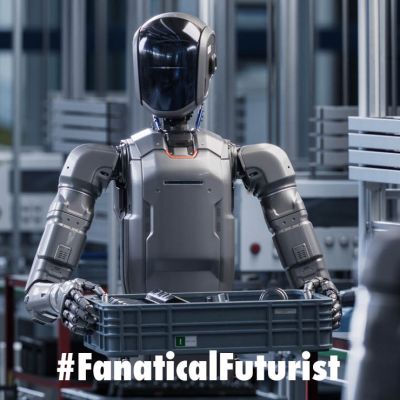
WHY THIS MATTERS IN BRIEF Atlas merges superhuman agility with DeepMind’s Gemini AI to replace high-risk manual labor with autonomous,…

WHY THIS MATTERS IN BRIEF Researchers are among lots of people trying to use adversarial AI prompts to game AI…

WHY THIS MATTERS IN BRIEF As Elon Musk and buddies eye Mars as the next human colony at some point…

WHY THIS MATTERS IN BRIEF There are situations where being able to extend WiFi is useful and important, such as…

WHY THIS MATTERS IN BRIEF What if you could increase the power of a laser by a million fold by…
WHY THIS MATTERS IN BRIEF With a $2 Trillion valuation Nvidia has proven there’s a huge market for GPU’s and…

WHY THIS MATTERS IN BRIEF I’ve been tracking the rise of transparent electronics and TV’s for a long time now,…

WHY THIS MATTERS IN BRIEF Having a Darkweb trained AI gives criminals a massive advantage by democratising and reducing the…
WHY THIS MATTERS IN BRIEF LiON batteries have their issues, and as everyone uses more of them more researchers are…

WHY THIS MATTERS IN BRIEF Companies have been trying to tie up online and offline purchase behaviours and data for…