WHY THIS MATTERS IN BRIEF
Today’s data storage data systems will store data for decades well, but over time they corrupt so this could preserve humanity’s legacy.
Matthew Griffin is the World’s #1 Futurist Keynote Speaker and Global Advisor for the G7 and Fortune 500, specializing in exponential disruption across 100 countries. Book a Keynote or Advisory Session — Join 1M+ followers on YouTube and explore his 15-book Codex of the Future series.
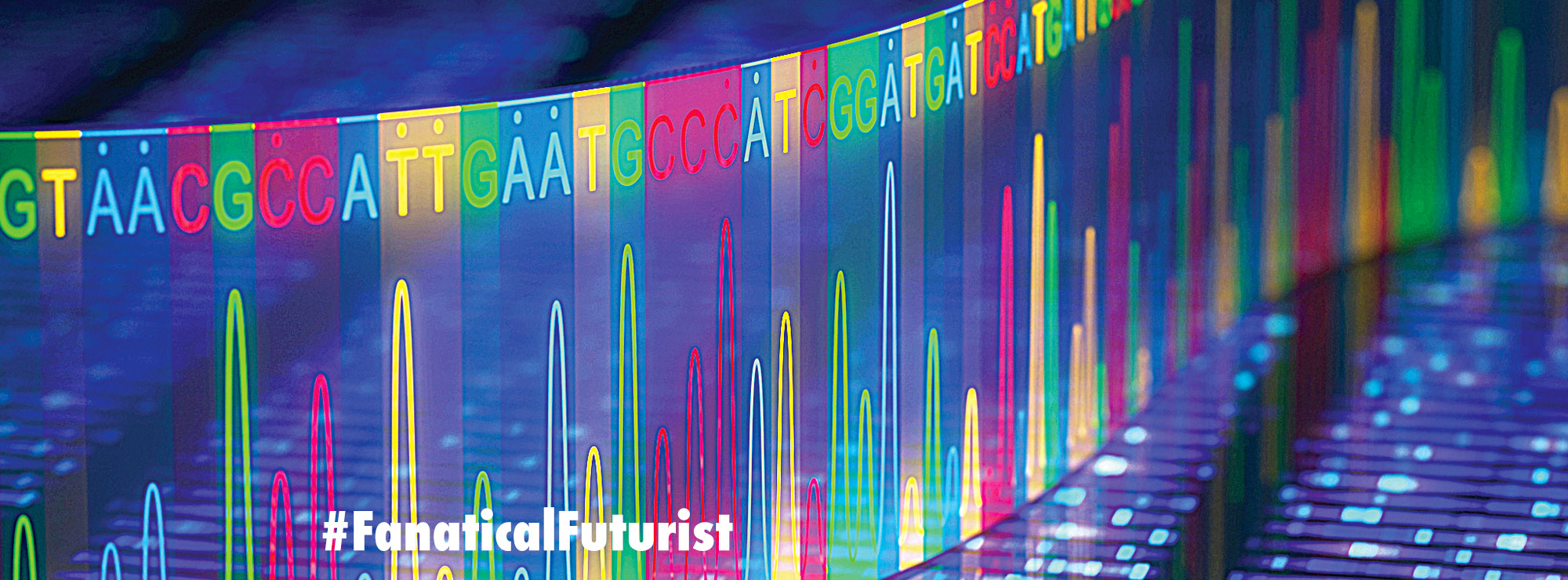
Over the years we’ve seen 5D glass storage crystals, glass lasers, glass batteries, and even glass AI, and now Microsoft has just hit a major milestone in a project that could end the digital dark age. Their researchers have found a way to pack nearly 5 terabytes of data, roughly the equivalent of 2 million printed books, onto a piece of glass about the size of a drink coaster. Unlike the hard drives or magnetic tapes used today, which tend to fail or decay within a decade or two, this glass storage is designed to keep information safe for at least 10,000 years.
According to the Microsoft Research Blog, “Glass is a permanent data storage material that is resistant to water, heat, and dust.” This durability means that once data is etched inside, it stays there.
Richard Black, the research director for Project Silica at Microsoft Research, told Nature: “The nice thing about the glass is, once it’s written, it’s immutable. You’re done.”
The real breakthrough here isn’t just the longevity, but the cost. Previously, this tech required incredibly expensive, high-purity silica. Now, the team has successfully moved the technology to borosilicate glass, the same sturdy material used to make Pyrex dishes and oven doors.
By switching to a material found in everyday kitchens, Microsoft has cleared a massive hurdle for making this technology affordable enough for actual use. The system has also become much leaner. While older versions required a complex array of cameras to read the data, the new version needs only one. This makes the hardware smaller, faster, and much easier to build at scale. To get data into the glass, scientists use a “femtosecond” laser, which fires pulses of light so fast they are measured in quadrillionths of a second. These pulses create tiny 3D deformations called “voxels” inside the glass.
Think of a voxel as a 3D version of a pixel. By using these pulses to change the way light moves through the glass, the team can stack hundreds of layers of data in a chip just 2 millimeters thick. To retrieve the data, an automated microscope scans the glass while a machine learning algorithm decodes the captured images to reconstruct the original files.
Currently, the world’s most important archives, like medical records or historical documents, must be migrated every few years. This means engineers have to constantly copy data from old, dying hard drives onto new ones to prevent loss. It is a never-ending, expensive cycle that requires climate-controlled rooms and massive amounts of energy.
Project Silica changes that equation. Because the glass doesn’t need power or air conditioning to stay stable, it can sit on a shelf for centuries without any maintenance. While this tech probably won’t replace the SSD in your laptop anytime soon, it offers a “write-once, store-forever” solution for the world’s most vital records.
Microsoft has already put the tech to the test with some high-profile experiments. They have stored the original 1978 Superman movie on a piece of glass and partnered with the Global Music Vault to preserve songs deep under the Arctic ice.
Although the research phase is officially complete, the team is still investigating ways to make the laser writing even faster. For now, the goal is to provide a sustainable way for cloud companies and heritage organizations to protect the history of our civilization.