
SEARCH



WHY THIS MATTERS IN BRIEF Global supply chains are complex and can be easy for criminals to exploit by putting…

WHY THIS MATTERS IN BRIEF Everyone agrees that blockchain is a disruptive technology, and a technology that could help revolutionise…

WHY THIS MATTERS IN BRIEF Blockchain can help organisations and governments improve the resilience of their operations without compromising security…

WHY THIS MATTERS IN BRIEF The UN is backing a blockchain consortium to help them give a voice, and recognition,…

WHY THIS MATTERS IN BRIEF Blockchains immutability could be the key to keeping the US military’s assets and nuclear arsenals…

WHY THIS MATTERS IN BRIEF Blockchain is turning into a force of nature that’s changing the world and as the…
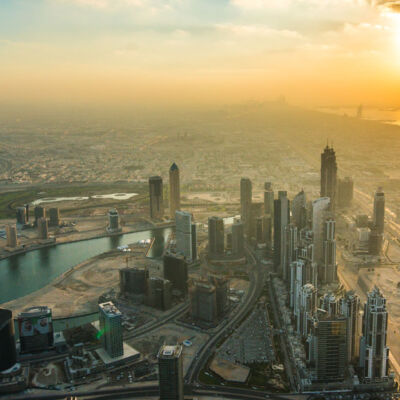
WHY THIS MATTERS IN BRIEF Dubai wants to become less dependent on oil and the emirate is rapidly becoming one…

WHY THIS MATTERS IN BRIEF Nasdaq imagines a day when you can bypass the local power company and buy power…

WHY THIS MATTERS IN BRIEF Tuna becomes the world’s first fish to get its own blockchain to track it’s provenance from net…

WHYTHIS MATTERS IN BRIEF Blockchains momentum keeps rolling on with another company announcing another major push. Another company jumped…

WHY THIS MATTERS IN BRIEF Blockchain is finding a home in the enterprise and now BHP want to use it to improve…

WHY THIS MATTERS IN BRIEF One of Blockchains key attributes is that it serves as an Immutable Record, now Accenture wants…

SpaceX’s market debut jumped 19% on day one, lifting Elon Musk’s fortune past $1 trillion and making him the world’s first trillionaire, according to the Bloomberg index.
OpenAI’s new policy paper proposes a “public wealth fund” that hands every citizen a stake in AI-driven growth – but critics argue it just ties the public’s wellbeing to the tech industry’s boom-and-bust cycles instead of expanding tested safety nets.
Elon Musk has called Bitcoin an ‘energy currency’ whose value is rooted in physics and electricity rather than government policy, and mused that AI and robots could one day make money itself obsolete.
America’s biggest banks, led by JPMorgan and Bank of America, are building a tokenised deposit network to settle payments on a blockchain around the clock, their answer to the rise of stablecoins.
Robinhood now lets customers spin up a dedicated account and wallet for AI agents that can analyse portfolios, place trades and — via a new virtual card — make payments, with human approval and spending limits in the loop.
From corporate stablecoins to programmable CBDCs and AI-driven money, this is a look at how currency could soon move faster than regulators and slip beyond purely human control.
Cloudflare secures a fifth of the internet using a wall of 100 lava lamps, whose ever-shifting blobs generate the true randomness that strong encryption keys depend on.
World Liberty Financial, the crypto venture tied to Donald Trump, is expanding into debit cards, tokenised commodities and its USD1 stablecoin as it pushes to extend dollar influence on-chain.