WHY THIS MATTERS IN BRIEF
Talk of space datacenters and AI’s trained in space are all great and everything – but first you need to test the concept.
 Love the Exponential Future? Join our XPotential Community, future proof yourself with courses from XPotential University, read about exponential tech and trends, connect, watch a keynote, or browse my blog.
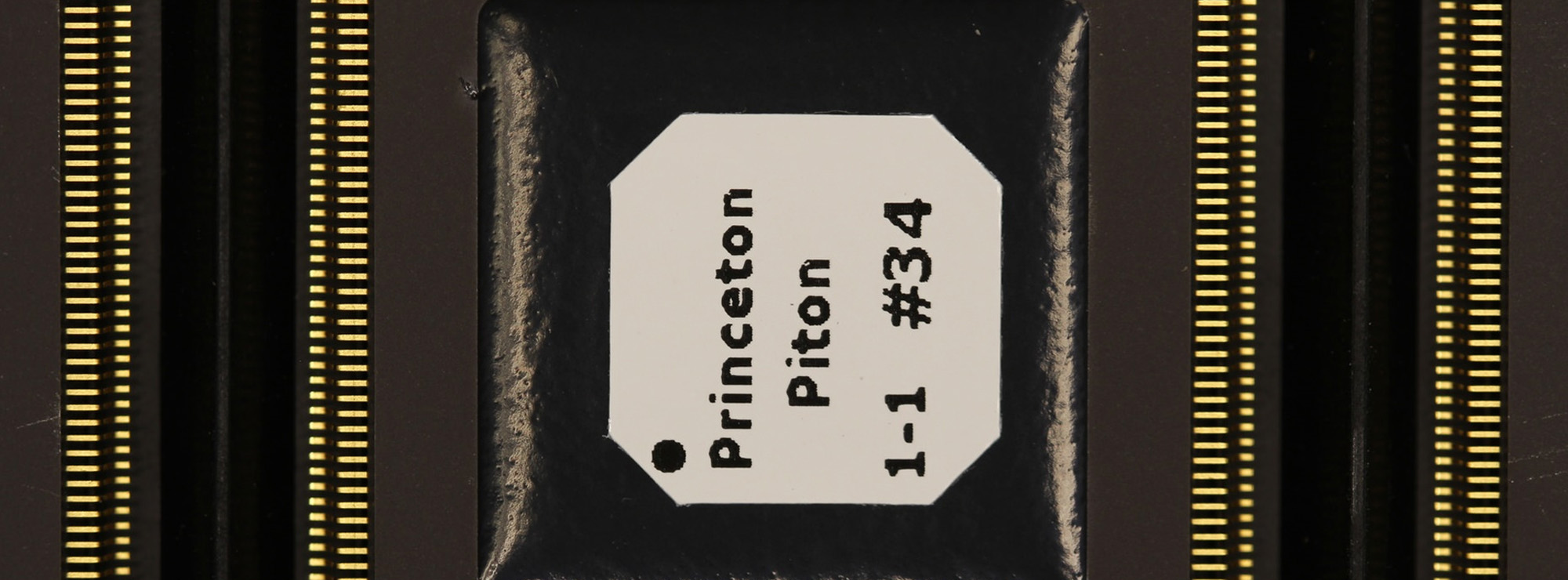
The first Nvidia H100 GPUs are heading into space next month. This out-of-this-world news comes as AI factory company, Crusoe, reveals its plans to become “the first public cloud operator to run workloads in outer space.” The orbital Crusoe Cloud deployment will be powered by Nvidia H100 GPUs and AI accelerators in strategic partner Starcloud’s AI data center satellites.
Crusoe and Starcloud share an energy-first vision of an Artificial Intelligence (AI) data center infrastructure that leverages solar power in space. The rays of energy-rich light emitted by the sun are unencumbered by the Earth’s atmosphere in the Starcloud’s orbit. Thus, companies that establish these kinds of resources in space can enjoy “almost unlimited, low-cost renewable energy.”
Estimates suggest space-based solar-powered data centers will benefit from 10x lower energy costs (including launch cost) vs those on Earth, and space allows for massive solar panel arrays, with no concerns about land use. Moreover, operating such systems puts no strain on the Earth’s energy grid. However, I would be interested to learn more about GPU cooling in space-based data centers, given that there is no air for the Earth-like traditional convection of heat, but also very little heat. Nvidia claims Starcloud will use the vacuum of deep space as “an infinite heat sink.”
Crusoe has a long history of co-locating its compute infrastructure near novel energy sources. Thus, GPUs in space are just a logical step for the company, albeit quite a large one. Cully Cavness, co-founder, president and COO of Crusoe, said “By partnering with Starcloud, we will extend our energy-first approach from Earth to the next frontier: outer space.”
Starcloud is a Redmond-based Nvidia Inception program backed company. It is focused on building data centers in space, scalable to gigawatt capacities, making it a natural fit for Crusoe’s ambitions.
“Having Crusoe as the foundational cloud provider on our platform is a perfect alignment of vision and execution,” said Philip Johnston, CEO of Starcloud.
“Crusoe’s expertise in building rugged, efficient, and scalable computing solutions makes them the ideal partner to pioneer this new era.” Johnston also underlined the possibilities of unlocking cloud computing power in space for research, discovery, and innovation.
The partners seem to have even more ambitious plans, going forward, with regard to scaling. However, at this stage, it is rather premature to talk of plans more astronomical than those already sketched out from now until early 2027. Starcloud will be the first to launch Nvidia H100s into space this month. Crusoe will deploy its Crusoe Cloud service on a Starcloud satellite scheduled to launch in late 2026. Subsequently, Crusoe plans to offer limited GPU capacity from space by early 2027, thus “pioneering a new paradigm for AI factories.”